
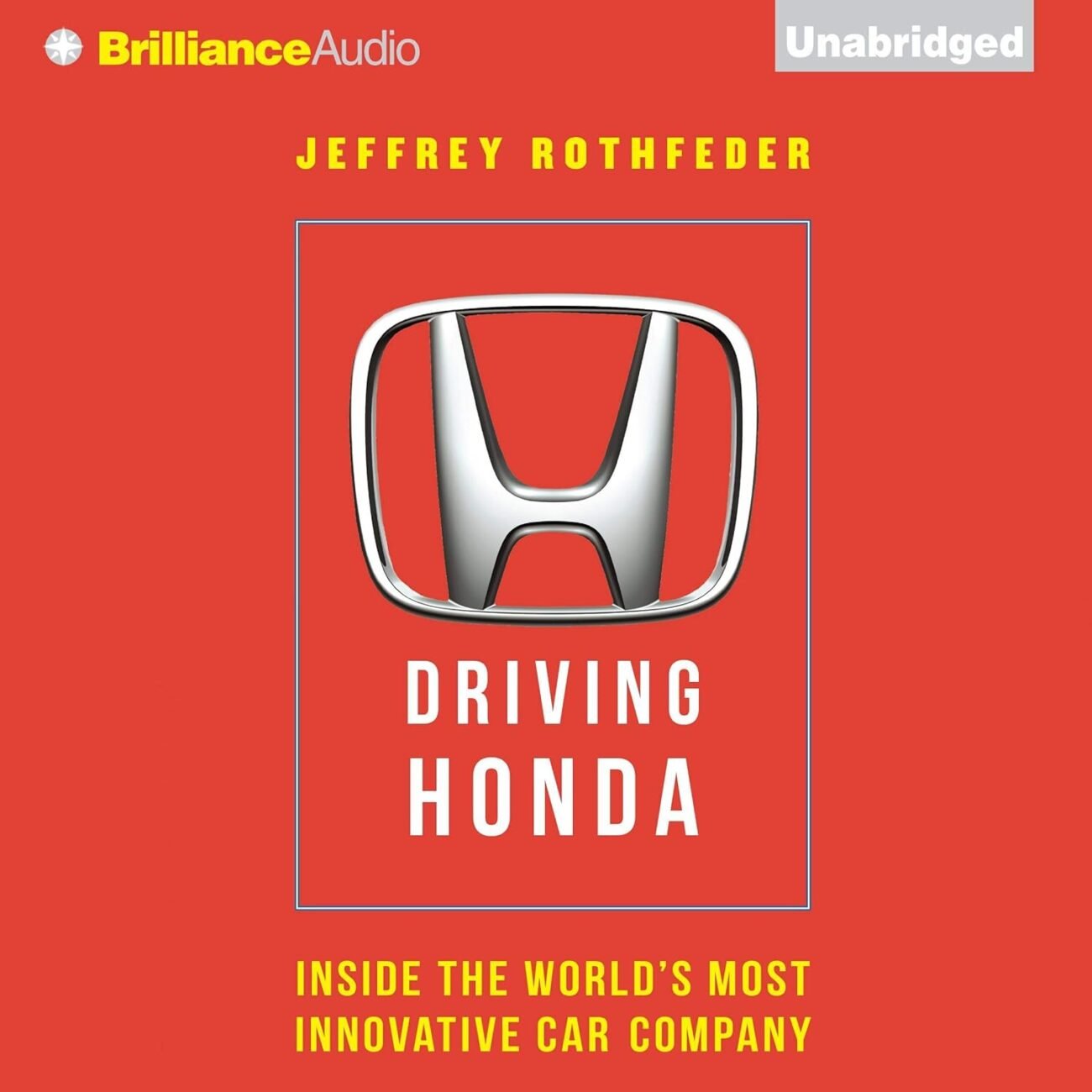


Product Review: Driving Honda: Inside the World’s Most Innovative Car Company
In an era where the global automobile industry is undergoing rapid transformation, Jeffrey Rothfeder’s “Driving Honda: Inside the World’s Most Innovative Car Company” emerges as a comprehensive exploration of Honda’s unique practices and philosophies. This book offers an insightful glimpse into how Honda, often overshadowed by its heavyweight rival, Toyota, has managed to carve a niche for itself as an innovative force in the automotive market.
The first aspect that stands out in Rothfeder’s writing is his exceptional storytelling ability. He weaves together Honda’s historical narratives with modern management theory, making the text accessible to both car enthusiasts and business professionals alike. The book traces Honda’s journey from its roots as a motorcycle manufacturer in 1949 to its current standing as the world’s fifth-largest automaker. This historical context not only provides a robust foundation for the text but also allows readers to appreciate the depth of Honda’s journey, its challenges, and its triumphs.
One of the book’s key focal points is the philosophies that underpin Honda’s operational success. Rothfeder delves into what he terms The Honda Way, a set of management principles that are starkly different from conventional corporate strategies. These principles—decentralization, simplicity, experimentation, and a critical stance toward complacency—serve as the backbone of Honda’s operations. This is particularly interesting when juxtaposed with Toyota’s famously rigid methodologies such as the Toyota Production System (TPS). By emphasizing a culture of autonomy and innovation, Honda encourages its employees to think creatively and challenge existing norms. Rothfeder illustrates this through numerous examples, demonstrating how this unorthodox approach has repeatedly led to breakthrough products and achievements.
The narrative fleshes out the visionary leadership of Soichiro Honda, the company’s founder, whose entrepreneurial spirit and disdain for the status quo have left an indelible mark on the company’s ethos. Rothfeder presents Honda as a living embodiment of its founder’s principles, highlighting how the company continues to thrive on a mix of nostalgia and forward-thinking innovation. For those interested in the intersection of culture and business, the book is a compelling case study in how an organization can remain relevant by staying true to its foundational ideals while also embracing modern technologies.
A significant portion of the book is devoted to Honda’s innovative practices in engineering and design. Rothfeder does an admirable job of explaining complex automotive technologies in an understandable manner. He discusses the development of some of Honda’s most celebrated models, such as the Civic, Accord, Odyssey, CR-V, and Pilot. The author’s insights into the testing and refinement processes reveal not only Honda’s commitment to quality but also the importance of customer feedback in their product development cycle. Readers can glean valuable lessons on consumer-centric design and iterative innovation that can be applied beyond the automobile industry.
The book also addresses the challenges Honda faces today, including intense competition, evolving consumer expectations, and the broader shift toward electric vehicles. Here, Rothfeder’s perspective provides a balanced view, illustrating that while Honda has been a pioneer in many areas, it will need to continue to adapt and innovate to maintain its leading position in the industry. This realistic appraisal makes the text not just a celebration of past achievements but also a forward-looking examination of where the company is headed.
However, it’s essential to note that while Rothfeder sings the praises of Honda’s management style, some readers might find it somewhat idealized. The book does an excellent job of highlighting successes but may skim over challenges and setbacks that have characterized Honda’s journey. Understanding these complexities would offer a more well-rounded perspective, especially for those interested in leadership and management practices.
In terms of production quality, “Driving Honda” is beautifully presented with an appealing layout that includes charts, illustrations, and diagrams that enrich the text. It caters to visual learners and enhances overall comprehension of the topics discussed. The writing style is engaging and flows smoothly, making it an easy and enjoyable read for a wide range of audiences, from car enthusiasts to business leaders.
In conclusion, “Driving Honda: Inside the World’s Most Innovative Car Company” serves as an essential read for anyone interested in the intricacies of automotive innovation and management. Rothfeder successfully illuminates Honda’s distinctive culture and operational strategies while celebrating the company’s remarkable journey from motorcycle manufacturer to a global automotive powerhouse. Whether you are seeking inspiration for your professional journey or simply want to understand what makes Honda tick, this book offers valuable insights that resonate well beyond the world of automobiles. It is a timely and relevant exploration of a company that refuses to rest on its laurels, continually striving for excellence and relevance in a ever-changing landscape.
